
Why Slideshow Pacing Is the Secret to a Great Photo Slideshow
A great slideshow is not just a folder full of photos set to music.
It is timing.
It is rhythm.
It is knowing when to move quickly, when to slow down, and when to let a photo sit on screen long enough for people to feel something.
That is one of the biggest lessons I teach in The Slideshow Guru: A Step-by-Step Guide to Professional Slideshows. After more than 25 years of creating professional slideshows for weddings, memorials, birthdays, anniversaries, graduations, businesses, and family celebrations, I can tell you this with confidence: pacing can make or break a slideshow.
You can have beautiful photos, the perfect song, and a meaningful event, but if the pacing is off, the slideshow can feel too slow, too rushed, or just plain hard to watch.
And nobody wants Grandma's beautiful 90th birthday slideshow to feel like a hostage situation with background music.
What Is Slideshow Pacing?
Slideshow pacing is the speed and rhythm of your photo slideshow. It controls how long each image stays on screen, how quickly transitions happen, how well the photos match the music, and how smoothly the story moves from one moment to the next.
Good pacing helps a slideshow feel natural.
Poor pacing makes it feel awkward.
If the photos change too fast, people do not have time to recognize faces, read captions, or connect with the memory. If the photos stay on screen too long, the energy drops and viewers start checking the dessert table.
The goal is balance.
A professional slideshow should feel like a well-told story. It should move at a pace that fits the occasion, the music, and the emotional weight of the photos.
Different Events Need Different Pacing
One of the biggest mistakes people make when creating a custom slideshow is treating every event the same.
A wedding slideshow should not be paced like a memorial slideshow. A graduation slideshow should not move like a corporate presentation. A birthday slideshow may need more energy, while an anniversary slideshow may need more warmth and breathing room.
For example, a wedding rehearsal dinner slideshow often works best with a mix of sweet, funny, and romantic pacing. Childhood photos can move at a comfortable rhythm. Dating photos may feel more playful. Emotional family moments may need an extra second or two.
A memorial slideshow is different. Those photos need space. You want people to absorb the faces, the memories, the relationships, and the emotion. In that kind of tribute video, slower pacing usually works better because the slideshow is not just entertainment. It is remembrance.
A business slideshow, on the other hand, usually needs to be tighter. Viewers should understand the message quickly. Strong visuals, clean timing, and concise storytelling matter more than lingering on every image.
That is why professional slideshow editing is not just about dragging photos into software. It is about understanding the purpose of the video.
The Simple Timing Rule
A good general rule for most photo slideshows is about 3 to 5 seconds per image.
That gives viewers enough time to see the photo, recognize who is in it, and feel the memory without letting the slideshow drag.
For high-energy slideshows, such as sports highlights, upbeat birthday videos, or fast-moving event recaps, you can move faster. Around 2 to 3 seconds per photo may work better, especially if the music has a strong beat.
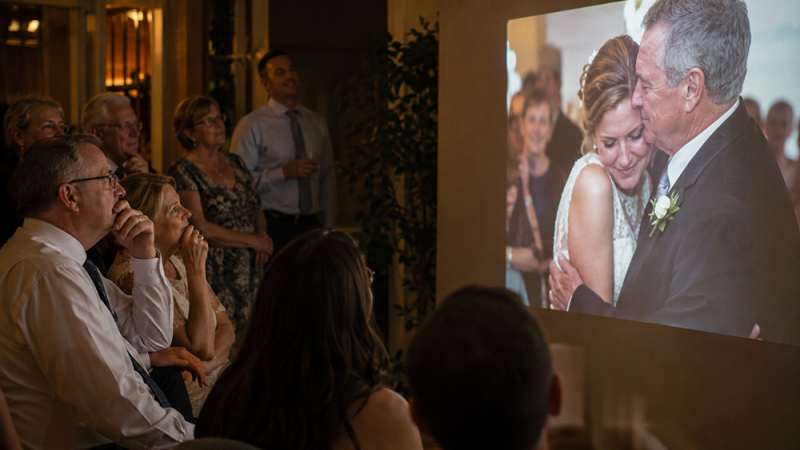
For emotional slideshows, such as memorial tributes, anniversary videos, or family legacy slideshows, some images may need more time. A powerful photo of a father walking his daughter down the aisle, a final family portrait, or a candid laugh between generations deserves room to land.
At Milestone Slideshows, we often recommend planning around 15 photos per minute of music as a practical starting point. Faster songs can handle more photos. Slower songs usually work better with fewer.
That simple guideline helps keep the slideshow from becoming too crowded.
Want the math done for you? Try our free Slideshow Length Calculator to estimate your ideal slideshow length, how many songs you need, and how many photos fit each song.
Do Not Give Every Photo the Same Amount of Time
This is where a lot of DIY slideshows start to feel robotic.
Every photo appears.
Every photo stays for four seconds.
Every photo fades.
Repeat 150 times.
Technically, that works. Emotionally, it feels flat.
Not every photo has the same importance. A quick snapshot of a vacation meal may only need a few seconds. A once-in-a-lifetime photo, like a wedding kiss, a graduation hug, or a child sitting on Grandpa's lap, may deserve more time.
Professional slideshow pacing uses variation.
Some photos move quickly.
Some moments breathe.
Some transitions land right on the beat of the music.
That variation keeps the viewer engaged because the slideshow feels alive instead of mechanical.
Let the Music Guide the Slideshow
Music is one of the most powerful parts of a slideshow, but it should not just sit underneath the photos like wallpaper.
The best slideshows are edited with the music.
When the song builds, the visuals can build. When the song softens, the slideshow can slow down. When there is a meaningful lyric, that may be the perfect place for a powerful image. When the beat changes, that may be the right time to shift from childhood photos to wedding photos, from family moments to career highlights, or from old memories to recent ones.
This is especially important for wedding slideshows, graduation slideshows, memorial slideshows, and anniversary slideshows because music sets the emotional tone.
A sentimental song can make a family slideshow feel heartfelt.
An upbeat song can make a birthday slideshow feel fun.
A romantic song can make a wedding slideshow feel cinematic.
But the timing has to match.
If the photos fight the music, viewers feel it even if they cannot explain why.
Pacing Helps Tell the Story
The best slideshows have a beginning, middle, and end.
That does not mean every slideshow has to be strictly chronological, but it should feel like it is going somewhere. For more on structuring a compelling narrative, see our guide on how to tell a story with a photo slideshow.
A graduation slideshow may begin with baby photos, move through school years, include family and friends, and end with cap-and-gown moments.
A wedding slideshow may begin with childhood photos of the bride and groom, move into dating memories, show family relationships, and end with the couple's love story.
A memorial slideshow may begin with early life, show family, career, hobbies, friendships, and close with a meaningful final image or message.
Pacing helps those sections feel intentional.
You might use a slower pace for childhood or emotional moments, a quicker pace for fun memories, and a strong closing sequence that gives the audience a satisfying ending.
That is the difference between a random photo slideshow and a professional video tribute.
Too Many Photos Can Hurt the Slideshow
This is hard for people, especially when every photo feels important.
But a great slideshow is not about using every picture.
It is about using the right pictures.
When you overload a slideshow with too many images, several things happen:
- The video becomes too long.
- The best photos get buried.
- The audience gets tired.
- The emotional moments lose impact.
- The pacing becomes harder to control.
A tight, well-paced slideshow will usually feel more powerful than a long one that tries to include everything.
That is why photo selection is such a big part of professional slideshow production. You are not just choosing images. You are choosing moments that move the story forward. For help with this process, check out our tips on preparing pictures for a slideshow.
Breathing Room Matters
One of my favorite slideshow pacing tricks is what I call breathing room.
A breathing point is a moment where the slideshow slows down just enough for the viewer to absorb what they are seeing.
Maybe it is a black-and-white photo of newlyweds from 1965.
Maybe it is a father holding his newborn daughter.
Maybe it is a family portrait from a vacation that everyone still talks about.
Maybe it is a photo of someone who is no longer here.
Those moments should not be rushed.
When done right, a breathing point gives the audience a second to feel the memory before moving on. It is a small editing choice, but it can make the slideshow feel much more emotional and professional.
The Biggest Pacing Mistake
The biggest pacing mistake is trying to fix a long slideshow by speeding everything up.
That usually does not work.
If a slideshow feels too long, the better solution is usually to remove repetitive photos, not race through them.
Three nearly identical photos of the same group standing in the same pose do not make the slideshow three times better. They just slow down the story.
Keep the best one.
Move on.
Your viewers will thank you, even if they do not know why the slideshow feels better.
When to Hire a Professional Slideshow Producer
Making a slideshow yourself can be rewarding, especially if you enjoy organizing photos, choosing music, and learning the editing process.
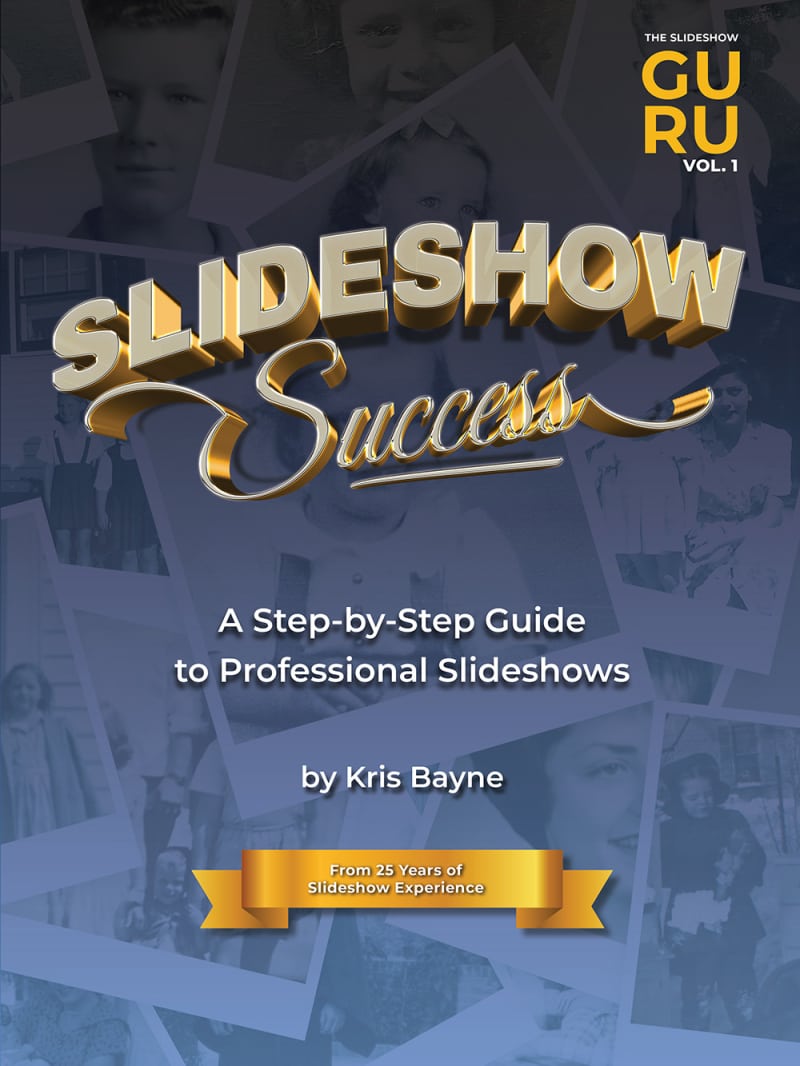
That is exactly why I wrote The Slideshow Guru. The book gives readers a practical guide to creating better slideshows with stronger structure, better pacing, improved photo selection, cleaner transitions, and more emotional impact.
But sometimes, you do not have the time, energy, software, or patience to do it yourself.
That is where Milestone Slideshows comes in.
If you want a professional slideshow for a wedding, memorial, birthday, anniversary, graduation, rehearsal dinner, celebration of life, retirement party, or business event, we can handle the hard part for you.
You send the photos.
We help turn them into a polished, emotional, professionally paced slideshow.
And yes, it is made by the guy who literally wrote the book on the subject.
Want to Learn or Want It Done for You?
If you enjoy the creative process and want to learn how to make better slideshows yourself, look for The Slideshow Guru: A Step-by-Step Guide to Professional Slideshows by Kris Bayne on Amazon.
If you would rather skip the software headaches and have a custom slideshow professionally made, visit Milestone Slideshows and let us bring your photos, music, and memories together in a way people will actually want to watch.
Because a great slideshow is not just about showing pictures.
It is about timing the memories so they hit the heart.
Ready to get started? See our pricing or contact us today.